Experimental film, HD video, H.264 codec, 16:9, 11 min 46 sec (2016)
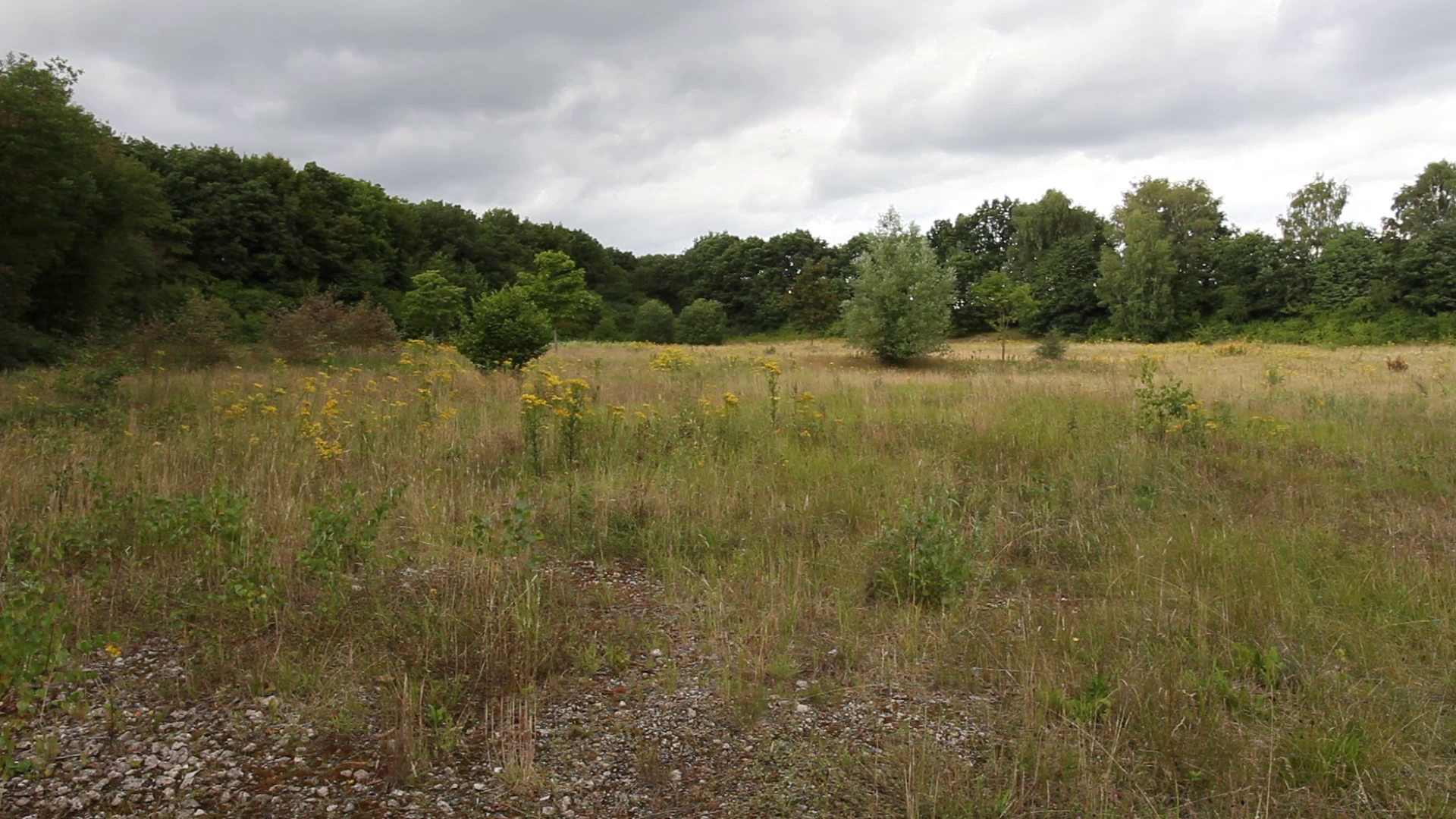
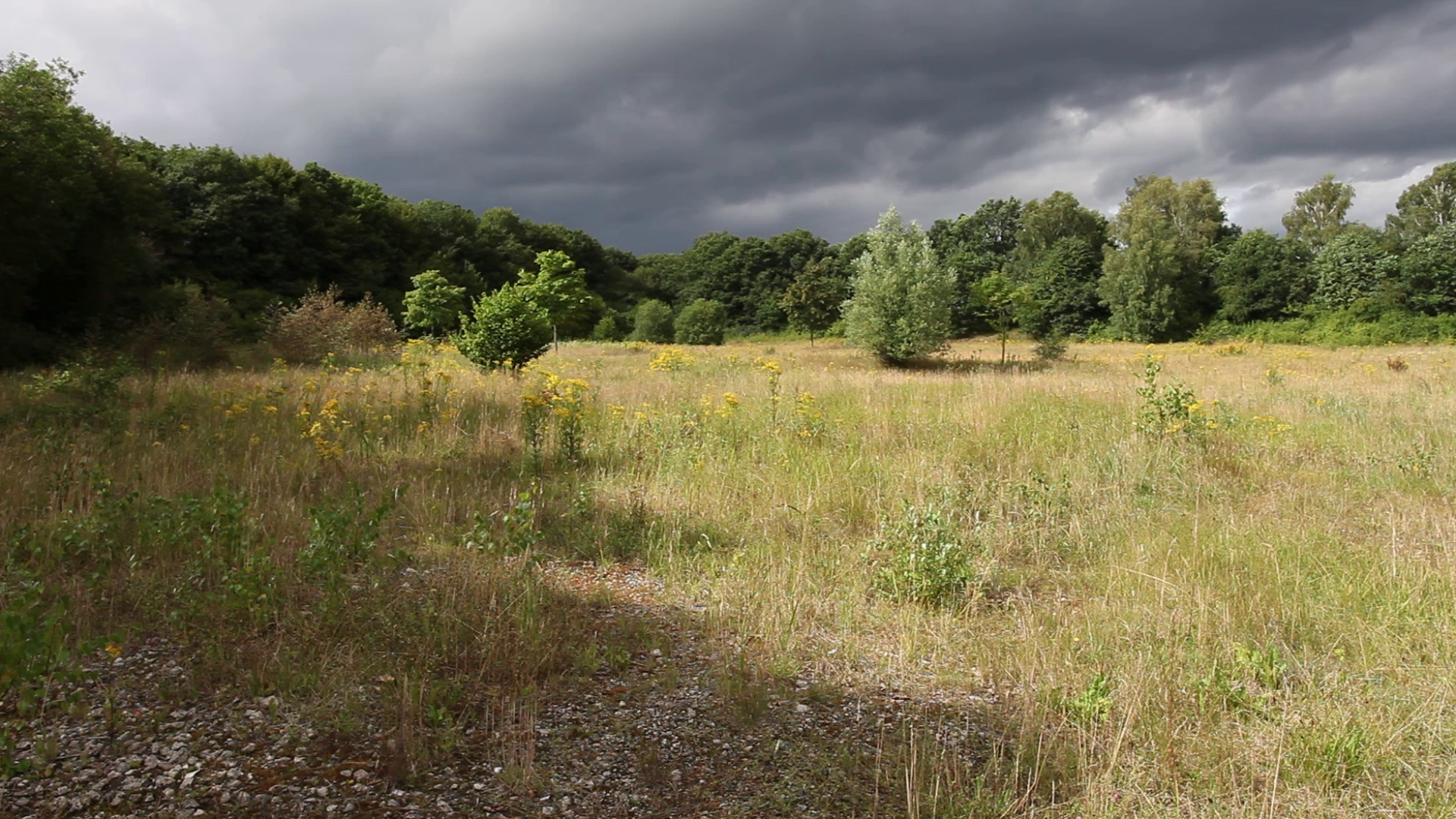
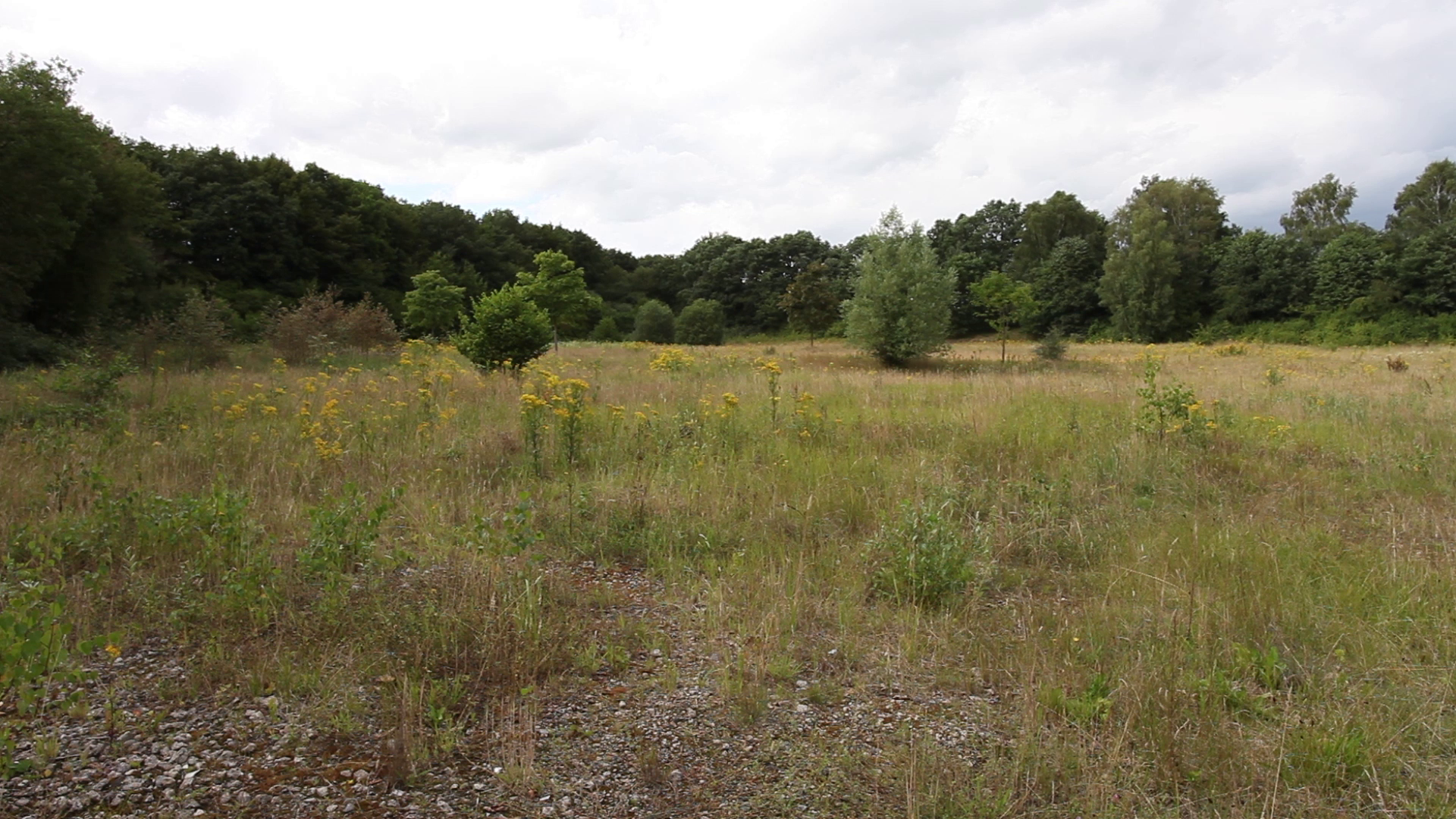
The image shows a static, photograph-like scene of a Central European meadow landscape. Only upon prolonged observation does the perceived immobility break open. Minimal changes in the vegetation and gathering cloud formations mark the transition from an unmoved document to a moving image. This landscape functions as a palimpsest. Until a few years ago, a shelter for refugees was located at this site. Its physical traces have been completely erased from the field of vision. This void is used by me to play the visual presence of nature against the absence of the architectural and the human. The film refuses the visual representation of history. Perception is forced into a space of pure anticipation.
The production of memory is examined here as a purely mental process. This takes place exclusively in the mind of the viewer. The screen remains a static depot. The cinematic narration is evoked solely through the sound level. A voice-over connects botanical inventories with bureaucratic administrative language and fragmentary interior monologues. These recur to the perspectives of three women. My own biography forms the starting point of the narrative: as a former resident of this shelter, I process personal memories and the witnessed stories of my neighbors at the time. A field of tension between the factual description of the current state and the reconstruction of a suppressed past is constructed by me through this montage. The retention and suspension of visibility form the thematic core. Access to the living conditions of the former residents is marked as inaccessible through the rendering of restrictive bureaucratic processes.
The work investigates the medial construction of absence within a seemingly neutral topography. At the center is the question of how collective memory of a place can be reconstituted solely through linguistic evocation without material evidence. This is relevant in the context of the institutional invisibilization of migration history in rural areas. The resilience of the landscape image as a repository for traumatic experience is examined.
The methodological approach is based on a deconstructive montage of static image and highly coded language. This film is positioned as an unstable construct between documentation and imagination. The function of landscapes as carriers of memory after the erasure of physical evidence is up for disposition. The illustration of fates is consistently rejected. On the medial investigation of absence, I concentrate completely in this process. Visible is the discrepancy between the neutral natural space and the institutional distance active beneath the surface. The project reveals the mechanisms through which bureaucratic language actively blocks access to individual life circumstances. The place becomes a repository of experiences. They elude the camera. Through the essayistic image montage, they gain a new, fragile reality in the imagination.
The work addresses discourses of media archaeology and post-migrant memory culture. It positions itself at the intersection of image-analytical research and experimental narration. The field of artistic investigation includes the material aesthetics of absence as well as the political dimension of landscape representation.