An Open-Air Memory Lab
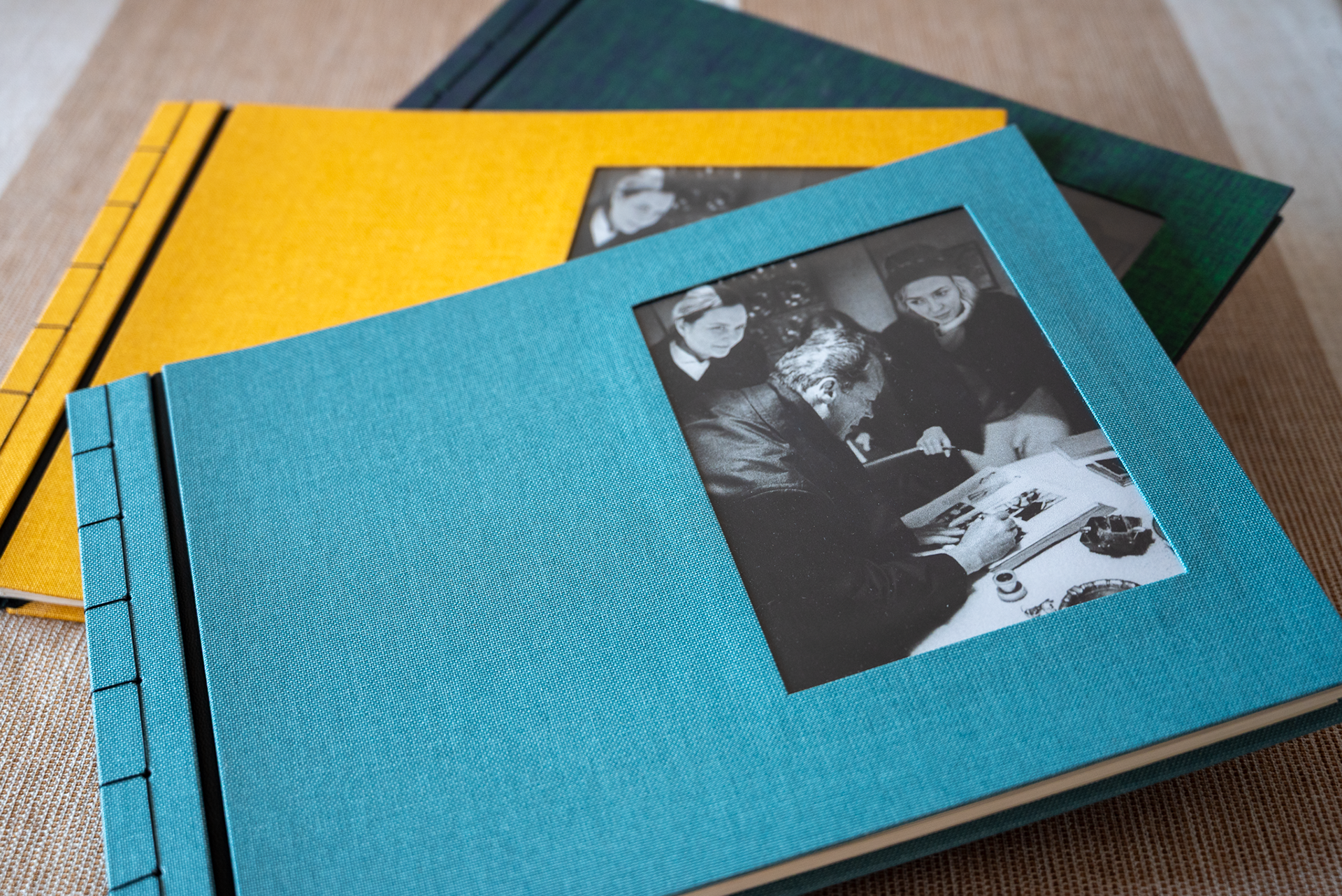
Hand-bound memory albums as a material manifestation of "Shared Frames," 2025. Bookbinding by Carmen Schmidt.
On Vinetaplatz in Kiel-Gaarden, the artist duo multicArts, consisting of Pola Rader and me, installed a temporary infrastructure as a mobile laboratory under the open sky. This district is deeply shaped by histories of migration and international displacement. We utilized this social landscape as an invitation for residents to actively claim the history of their current home. Historical photographs from the Kiel City Archives were exhibited directly in the urban space. Street scenes, facades, and anonymous group portraits served as projection surfaces for physical and narrative appropriation. Participants wrote on attached blank pages, corrected official historiography through their own lived experiences, or invented fictional biographies for the individuals depicted. Real and hybrid memories occupied the public square. At the end of this process stood a hand-bound artist's book, preserving these collective overwritings as a material manifestation.
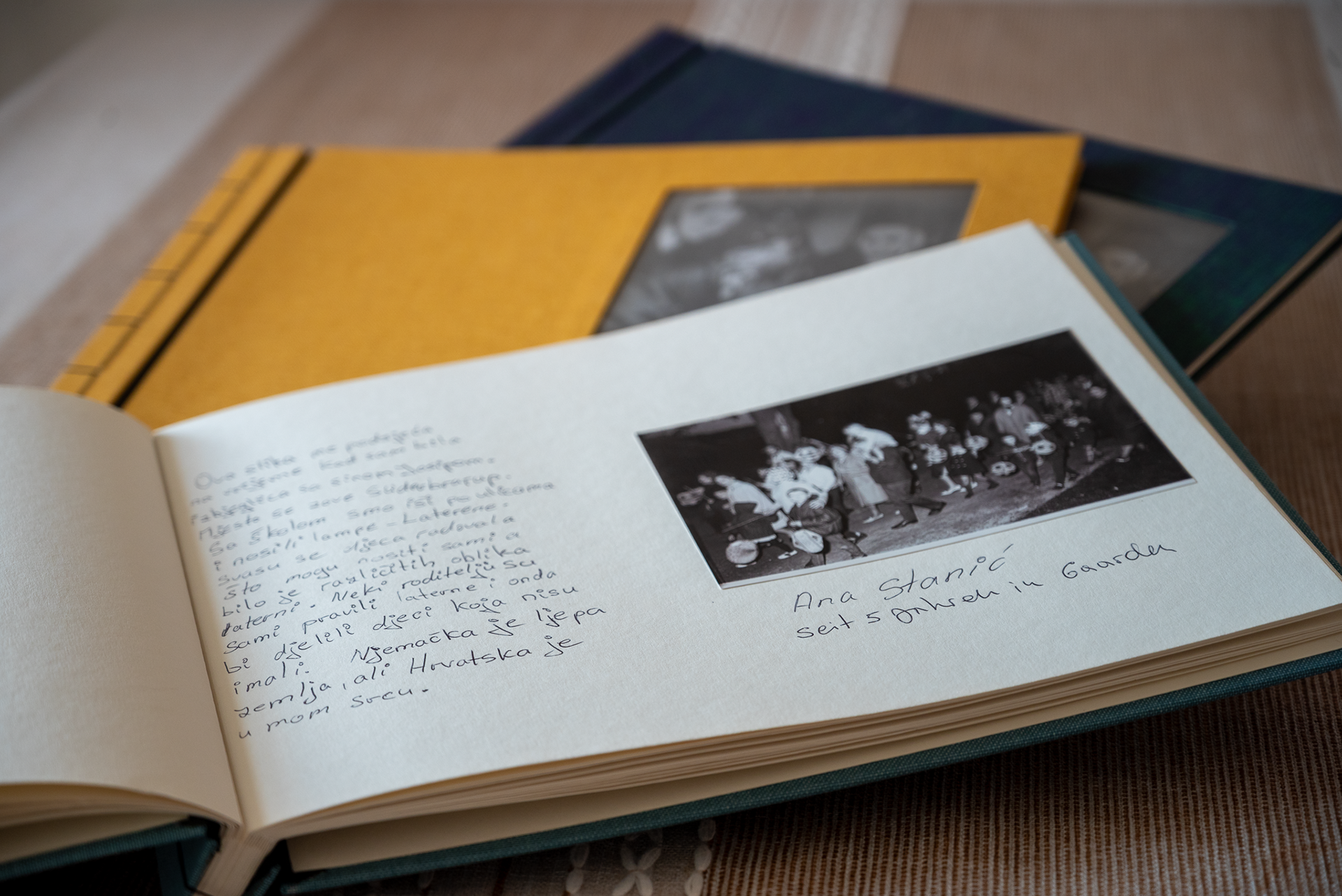
Individual intervention on archival photographs: Collective overwritings and narrative appropriation, Kiel-Gaarden 2025.
In the collaborative practice of multicArts, the archive is not perceived as a static site of preservation but as a field of permanent social negotiation. The reconstruction of collective identity through the deliberate reorganization of found footage forms the core of our investigation. The methodological approach is interventionist. The historical document is deconstructed by exposing it to the elements and to subjective commentary. A curated re-contextualization short-circuits bureaucratic photography with the unstable structures of oral tradition. We renounce an organizing meta-narration. Instead, we rely on an essayistic image montage performed by the participants on-site.
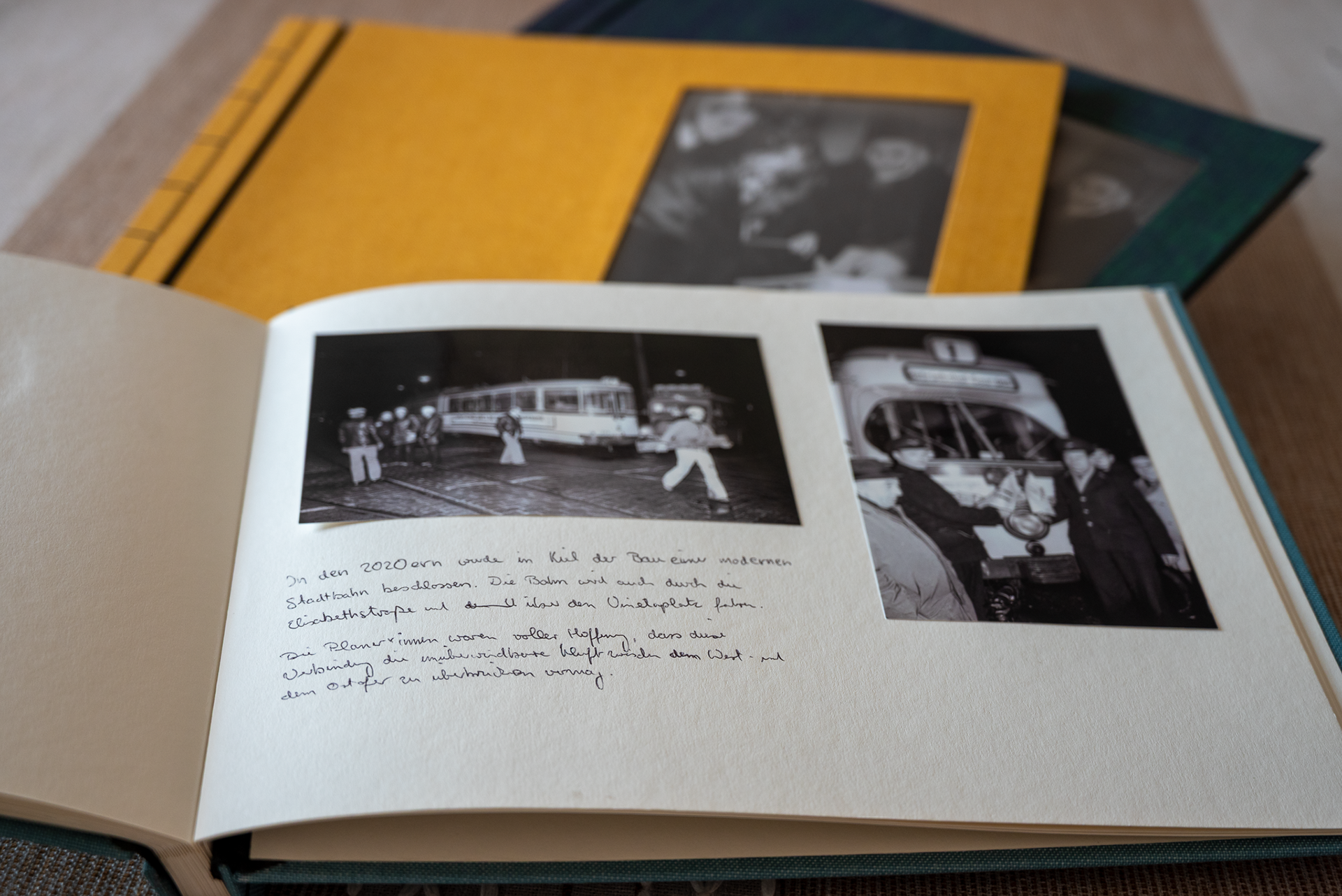
Individual intervention on archival photographs: Collective overwritings and narrative appropriation, Kiel-Gaarden 2025.
The central research question addresses the tension between official historiography and the often invisible narratives of a post-migrant society. Analysis is directed at how the physical exposure of archival assets in urban space can dissolve rigid hierarchies. An entry point is created for newcomers to integrate their own biographies into the local historical record. Memory proves to be an unstable construct that only attains situational validity at the moment of speaking or writing. We problematize the retention and suspension of visibility by shifting the focus from the purely visual content of the photograph to the overlaid layers of meaning. The archive functions as a catalyst for a present that permanently renegotiates its own origins.
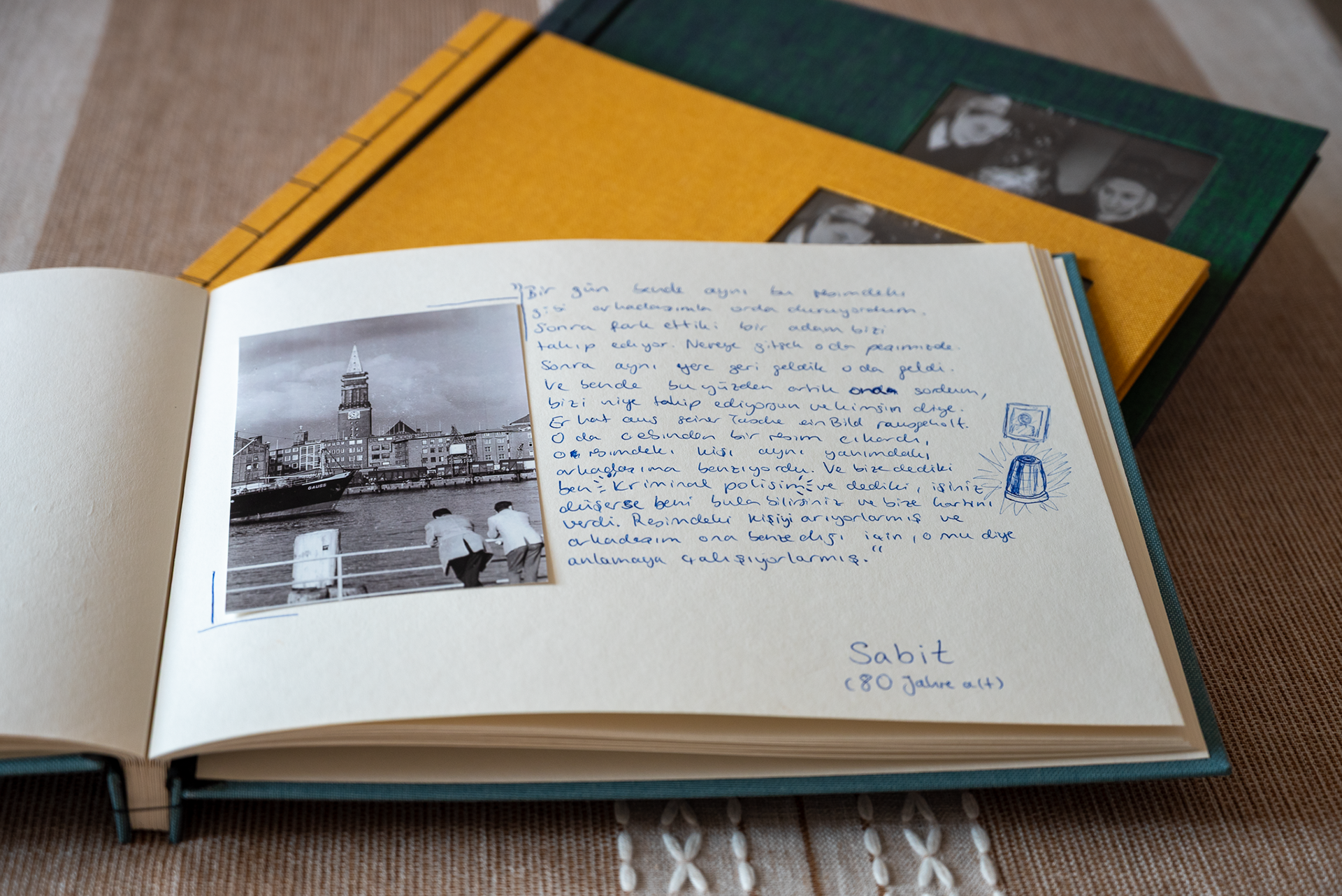
Individual intervention on archival photographs: Collective overwritings and narrative appropriation, Kiel-Gaarden 2025.
This production was made possible by the "Interventionist Art in Public Space in Kiel-Gaarden" fund of the City of Kiel. The project was realized by the duo multicArts, consisting of Pola Rader and me, in close cooperation with the Kiel City Archives, the Mehrgenerationenhaus Vinetazentrum, and the Soziale Stadt Gaarden office. Essential support in intercultural networking and multilingual communication was provided by the Türkische Gemeinde Schleswig-Holstein e. V. Within the team, multicArts was responsible for artistic direction and overall coordination, while Arturo Sayan shaped the process-based mediation work on-site. Linguistic and intercultural mediation were ensured by Şeyda Okumuş and Aylin Eser. Olena Danylova accompanied the process through digital documentation and public relations. The material conclusion was formed by the Buchbindemitmachwerkstatt Kiel under the direction of Carmen Schmidt, who transformed the collected fragments into the final memory album.
Visual documentation by Alwine Bakurin.